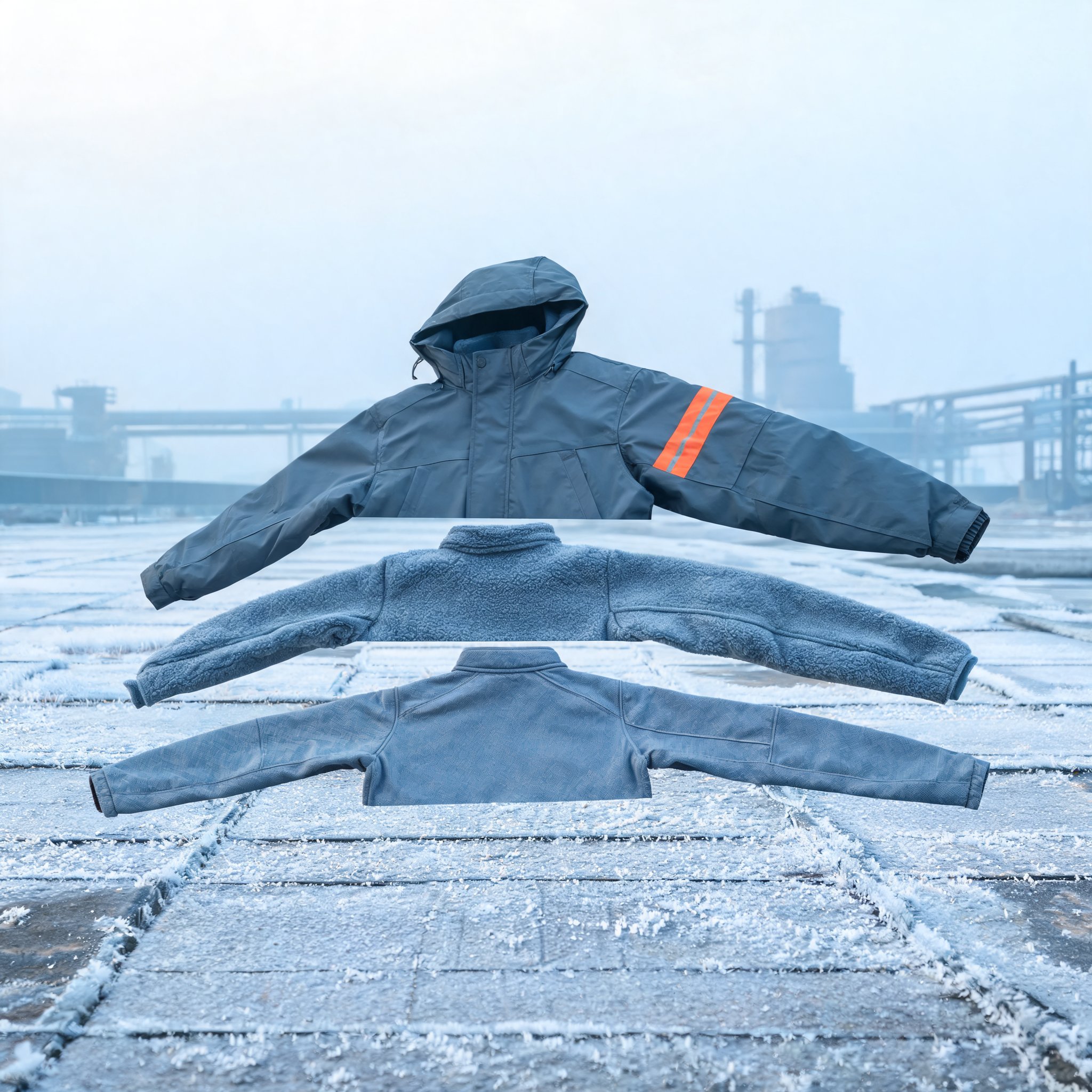
Outdoor work in winter raises risks for employees when personal protective equipment is selected or combined incorrectly, according to CWS Workwear International GmbH. The Dreieich-based workwear company has published guidance identifying five typical protection gaps in winter PPE.
The warning comes as shorter days, wet conditions and frost change the hazard profile at many outdoor workplaces. According to CWS Workwear, PPE is often not adjusted to match those seasonal conditions.
Layer combinations under scrutiny
The company says protection gaps arise particularly in the interaction between clothing layers. Individual garments may be certified, but the combination worn by the worker may still fail to meet the requirements of the relevant standards.
That distinction matters for employers and wearers: compliance cannot be assumed from the certification of a jacket, midlayer or base layer in isolation. The performance of the assembled clothing system needs to be considered, CWS Workwear advises.
The guidance therefore directs attention to the worn combination, not only to the certification of individual components. For winter outdoor work, the practical question is whether the layers function together under cold, wet and changing conditions.
CWS Workwear's warning is aimed at employers and workers who rely on layered PPE as temperatures fall. The company says the risk increases when the clothing system is left unchanged even as weather and working conditions shift.