SprintRay used its 3DNext 2026 event in Miami Beach to introduce three additions to its digital dentistry platform: a wireless, full-colour intraoral scanner built for its ScanOS software, a compact chairside production line called the Nano Series, and a new restorative material developed with GC Corporation.
The company said it has produced more than 20 million dental parts worldwide. According to SprintRay, the new products extend its connected workflow from scanning and design through production and post-processing, reducing the need for practices to move between separate systems.
Foundation scanner
The scanner, named Foundation, is described by the company as the first intraoral scanner designed for ScanOS. SprintRay said it brings scanning into the same account and interface used for design and production, so a practice can move from digital capture to a finished case without a separate file export or upload step after scanning. The device is due to launch officially in the United States, with first shipments expected in November 2026.
Co-founder and CEO Amir Mansouri said the company had previously connected scanning and printing through third-party integrations, but that the experience still required practices to move between systems. With ScanOS and Foundation, he said, scanning becomes a native part of the SprintRay workflow.
Nano Series chairside line
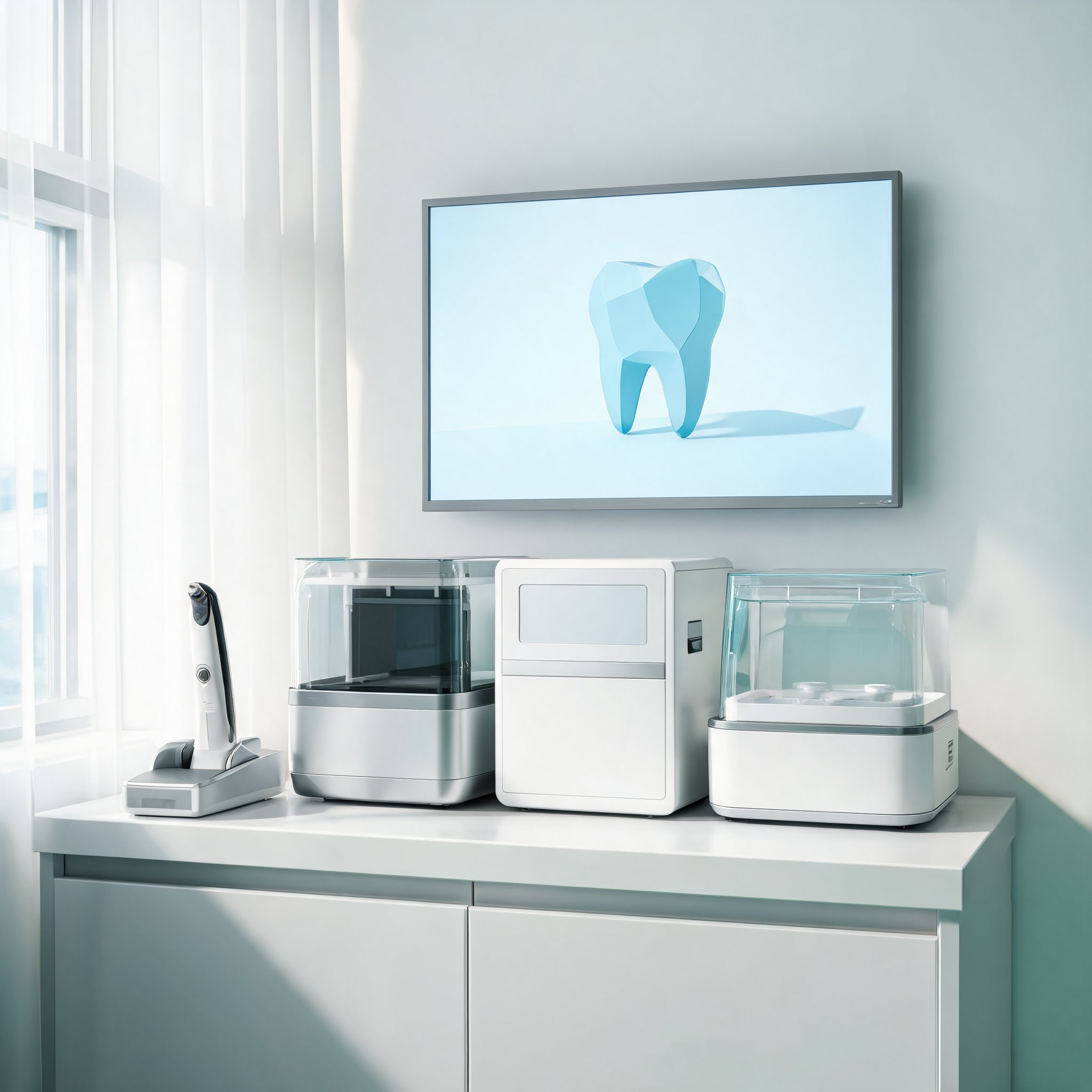
The Nano Series addresses what SprintRay estimates are the roughly 80% of chairside print jobs involving a single patient and a single case. It comprises three units — NanoPrint, NanoWash and NanoCure — designed as a connected print, wash and cure workflow occupying less than 30 inches of counter space.
- NanoPrint uses a 385 nm light engine.
- NanoWash automates washing and drying.
- NanoCure completes post-processing.
AutoPrint and Job Handoff features link the production steps and carry case information through the workflow, the company said. The line draws on SprintRay's validated materials library, with specific indications and availability varying by market.
Shipments are expected to begin in November 2026 in the United States, Canada, Australia, New Zealand and the European Union, subject to applicable regional regulatory requirements and product availability. SprintRay said NanoWash is not part of the Canadian launch offering.
Mansouri described the design goal as making chairside production more intuitive and practical for the dental team, bringing the workflow together in a compact footprint while maintaining the standards clinicians expect from the company.
GC material partnership
The third announcement concerns materials. Through a partnership with GC Corporation, SprintRay has launched GC GRADIA PREMi, a hybrid ceramic restorative resin developed for the SprintRay Midas Digital Press workflow. The collaboration pairs GC's restorative materials expertise with SprintRay's capsule-based Digital Press platform, with the stated aim of expanding material options for definitive chairside restorations.
SprintRay noted that specific clinical indications, performance claims and regional availability are subject to GC's final approved product labelling and regulatory review. Mansouri framed the partnership approach as combining openness with validation — working with leading partners to broaden what clinicians can do while maintaining rigorous workflow standards.