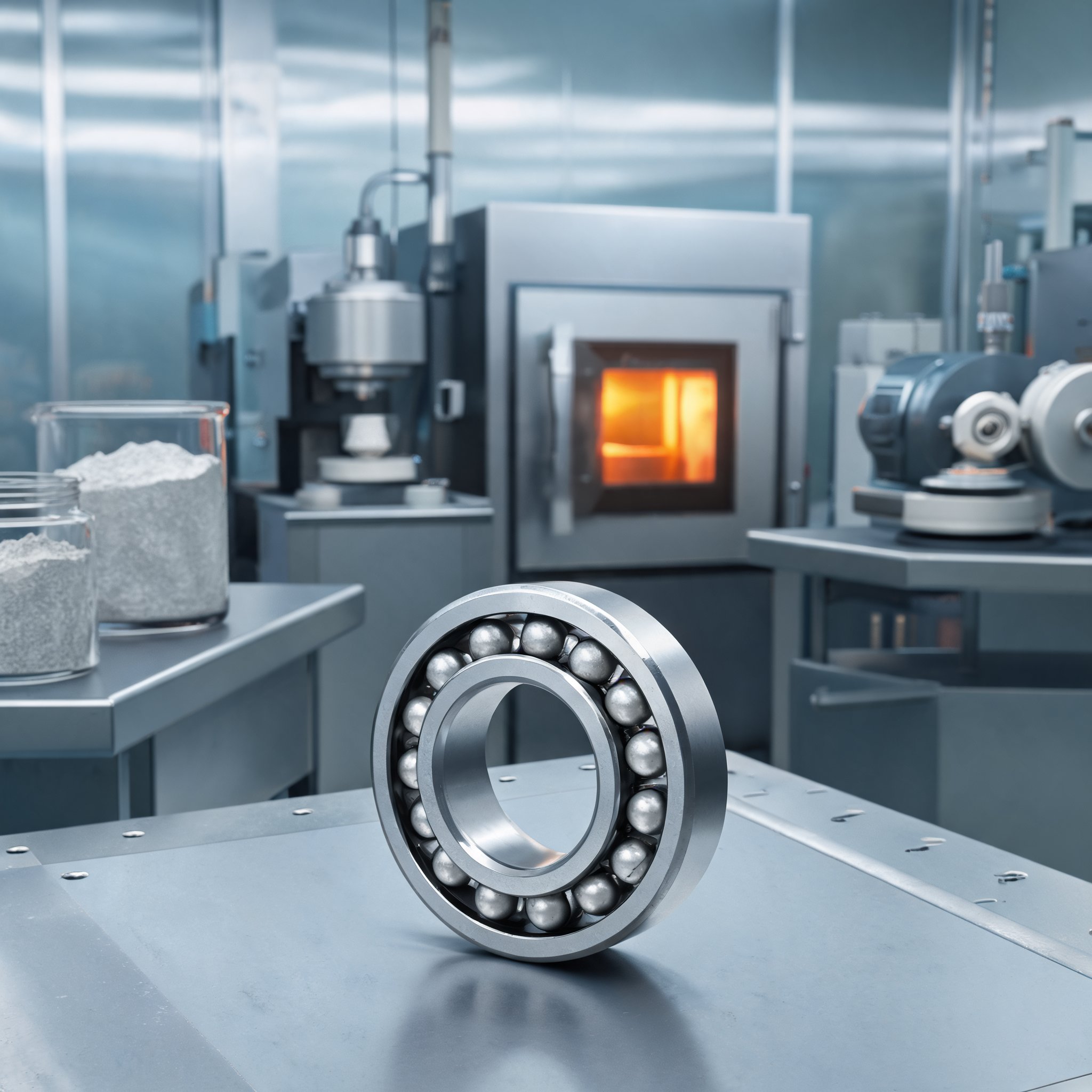
SKF has opened a Ceramic Process Laboratory (C-Pro Lab) at its research and development center in Houten, the Netherlands. The company describes the facility as a state-of-the-art addition that strengthens its capabilities across the full ceramic manufacturing value chain, from raw material powder processing to high-performance component engineering, and supports wider adoption of advanced hybrid bearing technology.
The lab arrives as demand for hybrid ceramic bearings is rising quickly, according to SKF, as industries pursue electrification and higher energy efficiency. Hybrid bearings combine high-grade steel rings with silicon nitride rolling elements. SKF says this construction provides better electrical insulation, lower weight and reduced friction than traditional all-steel bearings.
Annika Ölme, SKF’s chief technology officer and senior vice president for technology development, said ceramic and hybrid bearing technologies are essential enablers for clean, reliable rotation in next-generation industrial electrical applications. She said the C-Pro Lab gives the company full command of the end-to-end ceramic process, which allows it to innovate faster, optimize material performance and speed commercialization of high-performance hybrid solutions for customers worldwide.
End-to-end process work
SKF positions the C-Pro Lab as a global competence center within its research and technology development organization. The facility is intended to support end-to-end optimization of ceramic technology. By co-locating powder formulation, compaction, sintering and surface finishing, SKF researchers can prototype new material compositions quickly, tune microstructures and improve process efficiency for high-volume manufacturing.
The company says hybrid ceramic bearings address operational challenges in several expanding sectors, including industrial automation, aerospace and high-speed machinery. Demand in these areas is being driven by electrification, energy efficiency and operational reliability. SKF says ceramic technology can help prevent electrical erosion in high-speed electric motors, reduce friction by up to 50 percent and provide reliability at extreme temperatures in demanding environments.
SKF frames the laboratory as part of a broader effort to move ceramic technology from material research into commercial components. The company says the co-located process steps allow researchers to test new compositions and adjust microstructures before scaling them for high-volume production. That work is aimed at hybrid bearings used in electrically driven and high-speed equipment, where insulation, weight and friction are central design considerations.
Opening with customers
The official opening gathered customers from key industries such as railway, aerospace and drives, along with other stakeholders and H.E. Julius Liljeström, Swedish Ambassador to the Netherlands. SKF said the event underlined the importance of close customer collaboration in advancing industrial innovation and sustainable technology. Ölme and the ambassador took part in the grand opening, according to the company.