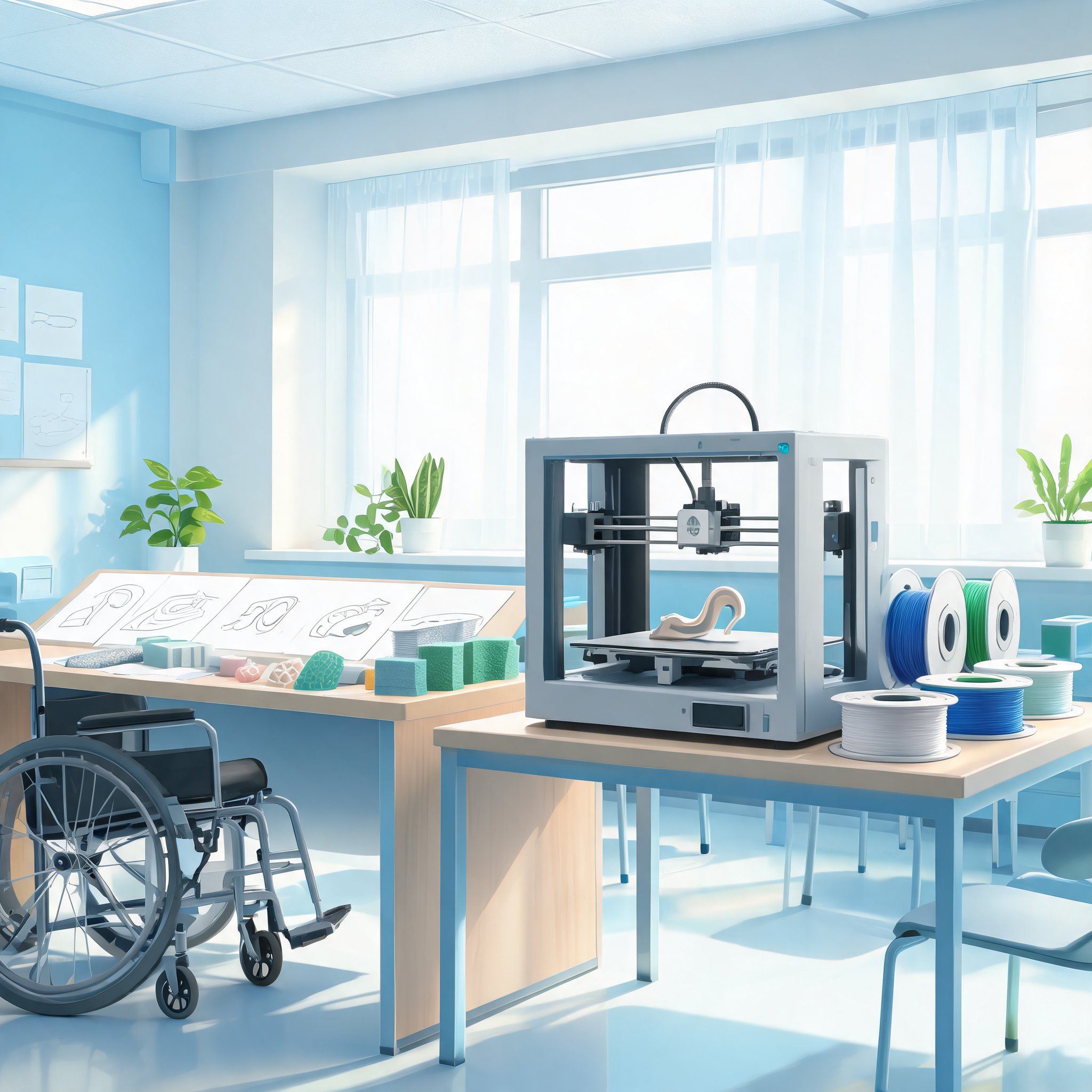
A University of Nottingham-led project has won funding to introduce 3D design and printing to children and young people in hospital education across England. The three-year programme is backed by a Royal Society Science Community Grant and the Julia Rausing Trust and will work with the National Association for Hospital Education (NAHE).
The initiative is aimed at students in specialist schools or hospital settings who may miss practical STEM activities because of complex health needs or long stays in hospital. Universities around the country are contributing engineering and science expertise, while staff in participating schools will receive training to run hands-on projects themselves.
Printers and training for 25 schools
In its first phase, 25 schools will receive a 3D printer and take part in a national training programme led by Nottingham with support from local partner universities. Delivery will run across a school term through coordinated sessions focused on user-centred design, ending in a showcase event.
Students will be encouraged to begin with their own surroundings, identifying everyday products or designs that could work better for them, before developing ideas for printing. The project is designed to combine technical learning with problem-solving and a tangible sense of achievement.
Sir Paul Nurse, president of the Royal Society, said schools are where most people first meet science. Practical work helps students experience scientific enquiry, weigh evidence, understand uncertainty and see how science can improve the world, he said, adding that more practical science in schools is important for building future scientists, innovators and a scientifically literate public.
Rehabilitation research link
Professor Ruth Goodridge, who leads the project at Nottingham, said children who spend long periods in hospital or attend specialist schools often miss the enriching, hands-on STEM experiences their peers take for granted. The project is intended to widen access to 3D design and printing, build confidence and develop skills, she said.
Goodridge also noted that hospital school staff report that illness can narrow a child’s world, with disrupted education, anxiety and low confidence affecting engagement. 3D printing, she said, offers an accessible way for students to solve problems, make something real and gain a sense of control and achievement, as well as glimpse new possibilities for their future.
The NIHR HealthTech Research Centre for Rehabilitation, led by Nottingham University Hospitals NHS Trust, is partnering on the project. It will explore how 3D printing technologies might support children’s rehabilitation and recovery after serious illness or injury.
Stephen Deadman of NAHE said the scheme would give children who cannot access traditional school valuable hands-on experience with specialist equipment. He added that working together within and between schools would also create a sense of community and shared achievement.