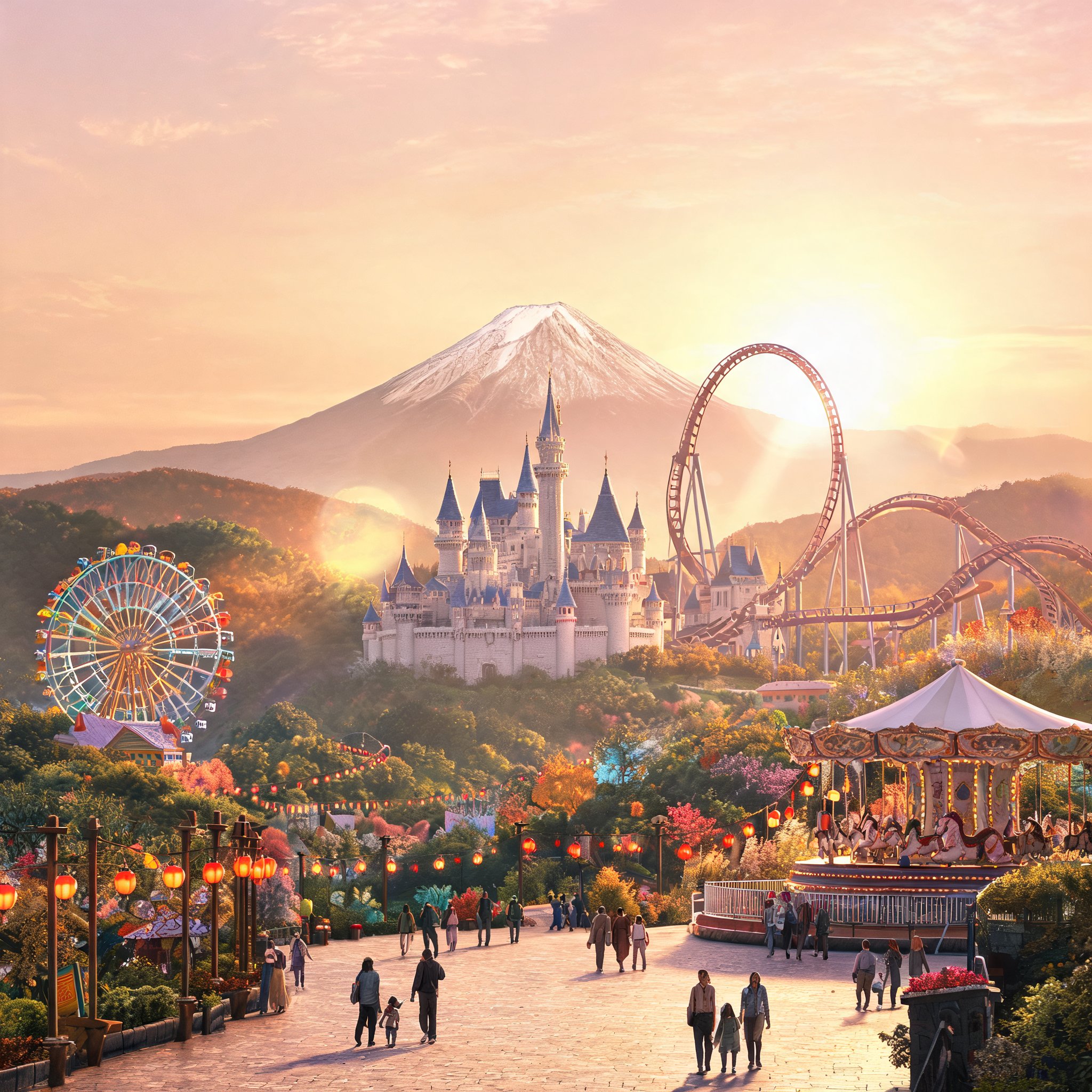
Japan's theme parks combine record-breaking roller coasters, film- and game-based lands and culturally themed attractions, and the sector is expanding as the country's inbound tourism reaches new highs. Japan welcomed a record 42.7 million international visitors in 2025, and its parks — from Tokyo Disneyland to smaller regional attractions — draw millions of guests from around the world each year.
The two Tokyo Disney parks, owned and operated by the Oriental Land Company under licence from The Walt Disney Company, have seen major investment. Tokyo DisneySea opened in September 2001 and spans 49 hectares across seven themed ports. In 2024 the resort opened Fantasy Springs, its largest expansion to date, a $2.2 billion development with worlds inspired by Frozen, Tangled and Peter Pan. Tokyo Disneyland, which opened on 15 April 1983 as the first Disney park outside the United States, announced in 2026 that Space Mountain Earthrise and Sugar Rush: Sweet Rescue would form part of a 100 billion yen ($630 million) transformation of Tomorrowland, with a new Space Mountain set to replace the original coaster in 2027.
Universal Studios Japan, which opened in Osaka in 2001, became the first Universal park to open Super Nintendo World in 2021 and added the world's first Donkey Kong Country area in 2024. In 2026 it announced its first expansion since 2001, with plans to invest up to 300 billion yen in new attractions across 60,000 square metres of nearby land.
Other recent openings reflect the pull of character and film IP. PokéPark Kanto, described as the world's first permanent outdoor Pokémon attraction, opened in February 2026 at Yomiuriland in Tokyo, covering 26,000 square metres with more than 600 Pokémon across two zones. Ghibli Park, which brings Studio Ghibli films to life across five themed areas in Aichi, completed those areas in March 2024 and announced plans for a new indoor area inspired by Nausicaä of the Valley of the Wind.
Thrill rides and heritage parks
Japan's coaster line-up includes Fuji-Q Highland, opened in 1968 near Mount Fuji, home to Fujiyama, Eejanaika and Takabisha, and Nagashima Spa Land, which opened in 1966 and has 13 operating coasters — more than any other amusement park in Japan — including Steel Dragon 2000.
Older attractions add historical depth. Asakusa Hanayashiki, established in 1853, is considered Japan's oldest amusement park and still runs the country's oldest surviving roller coaster, built in 1953. Hirakata Park, Osaka's oldest, dates to 1910 and draws around 1.3 million visitors a year. Edo Wonderland Nikko Edomura recreates an Edo-period town across 49.5 hectares, while Huis Ten Bosch in Nagasaki, Japan's largest theme park by area at about 152 hectares, opened the country's first premium flying theatre in 2025.
Family-focused and character parks round out the scene. Legoland Japan, which opened in Nagoya in April 2017, features Miniland Japan built from more than 10 million Lego bricks. Moominvalley Park in Saitama opened in 2019, while Sanrio Puroland in Tokyo and its outdoor sister park Sanrio Harmonyland in Oita present Hello Kitty and other Sanrio characters. Yomiuriland, home to PokéPark Kanto, attracted around 2.4 million visitors in 2024 and marked its 60th anniversary that year.