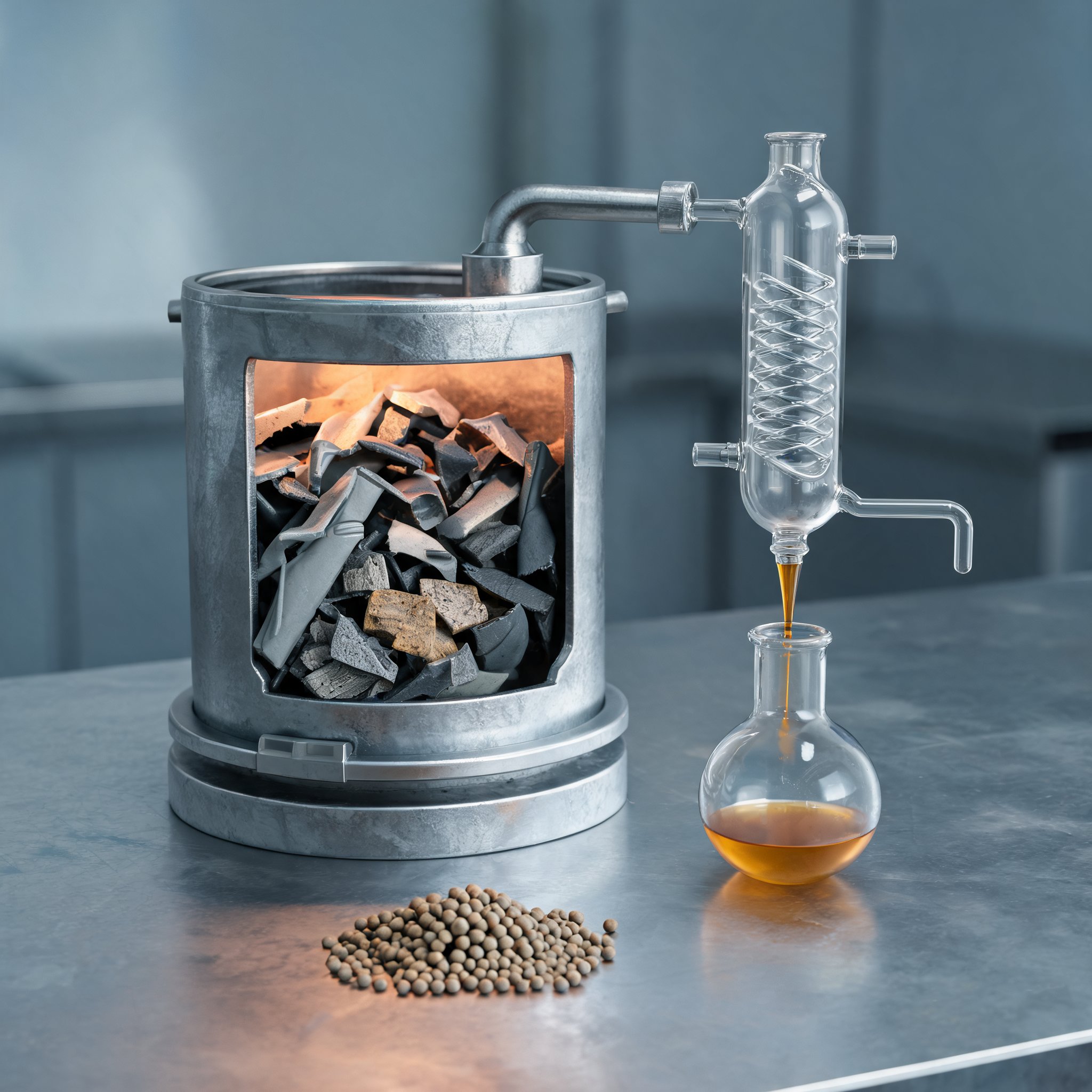
Recycling plastics from end-of-life vehicles (ELVs) is an important part of improving resource recovery and supporting more circular use of plastics, and pyrolysis has emerged as a promising route for recovering fuels and chemicals from waste polymers. The process thermally decomposes plastics at elevated temperatures without oxygen, breaking polymer chains into liquid, gaseous, and solid products.
Previous research has shown that pyrolysis can convert common automotive plastics such as low-density polyethylene (LDPE), high-density polyethylene (HDPE), and polypropylene (PP) into valuable hydrocarbons at relatively high yields, but much of that work has focused on automotive shredder residue, a heterogeneous mixture of plastics, metals, textiles, and other materials. That leaves less information about how plastics recovered directly from components such as dashboards, bumpers, and headlamps behave during pyrolysis. Automotive plastic waste (APW) can also contain mineral fillers, flame retardants, fiberglass, and other additives that affect degradation behavior and product composition.
Feedstock and catalyst
In the study, researchers characterized plastics recovered directly from ELVs rather than relying on mixed automotive shredder residue. The feedstock contained acrylonitrile butadiene styrene (ABS), HDPE and LDPE, PP, polystyrene (PS), and fiberglass, and it also contained substantial volatile and ash fractions. Front and rear bumpers accounted for 86.6% of the sample by weight, while fiberglass, commonly used to reinforce automotive components, contributed to the relatively high ash content.
Catalysts can improve pyrolysis efficiency by accelerating reactions and altering product distributions. Commercial zeolites have been widely studied, but lower-cost clay-based alternatives are drawing increasing interest, and pillared clays modified with metals such as iron, titanium, or zirconium have shown potential to raise liquid yields and influence the formation of fuel-range hydrocarbons. Iron-modified clays are particularly attractive because they may improve oil production without relying on more expensive commercial catalysts. Instead of using bentonite clay in its original form, the researchers modified it through iron pillaring, a process that introduces iron species into the clay structure and changes characteristics such as surface acidity and pore structure.
Yield versus composition
The team compared thermal and catalytic pyrolysis across temperatures ranging from approximately 350°C to 521°C and catalyst loadings of roughly 6% to 34% by weight, using a statistical experimental design to evaluate the interaction between temperature and catalyst concentration. The catalyst strongly affected liquid yield. Catalytic pyrolysis produced an average oil yield of approximately 68%, compared with 41% for thermal pyrolysis alone, and the highest oil yield, 78.6%, was achieved at about 416°C with a catalyst loading of roughly 24%.
The catalyst had much less influence on the composition of the resulting oil. Thermal and catalytic pyrolysis produced similar proportions of hydrocarbons within the C8–C24 range associated with gasoline- and diesel-range compounds, meaning the catalyst helped convert more of the plastic feedstock into liquid product but did not substantially shift that liquid toward a higher proportion of diesel-range molecules. Temperature had a greater effect on product composition: lower pyrolysis temperatures favored diesel-range organics, while temperatures above 450°C produced a heavier, waxier oil.
Fuel properties and next steps
The resulting pyrolysis oil showed several properties comparable to those of commercial diesel. The researchers reported a calorific value of 49.85 MJ/kg, a flash point of 113°C, and total aromatics of 3.55% by area, values within or comparable to ranges specified for conventional fuels. Branched heptenes and heptanes dominated the oil, compounds also identified in previous studies of polypropylene and automotive-plastic pyrolysis. However, not all properties met diesel specifications, as both density and viscosity exceeded the limits typically specified for diesel fuel, which the researchers attributed partly to heavier, long-chain hydrocarbon fractions remaining in the oil.
Additional processing could therefore be required before the oil could be used as a diesel-range fuel. The researchers suggested approaches such as distillation and centrifugation, as well as optimizing reaction conditions through lower temperatures and longer residence times, to reduce heavier fractions and improve fuel properties.
The study positions pyrolysis as a technically promising route for recovering value from automotive plastics while also highlighting the additional development required before the process can move toward broader commercial application. Future work could investigate different iron concentrations in the catalyst, improve reactor designs and heat transfer, and combine pyrolysis with downstream distillation to separate gasoline- and diesel-range fractions. Improved collection and sorting of automotive plastics will also be important: without systematic removal and classification of plastic components from end-of-life vehicles, reliable data on the volume and composition of available APW remain limited, and better information on these waste streams would help researchers and recyclers assess feedstock availability and plan potential industrial-scale pyrolysis operations.