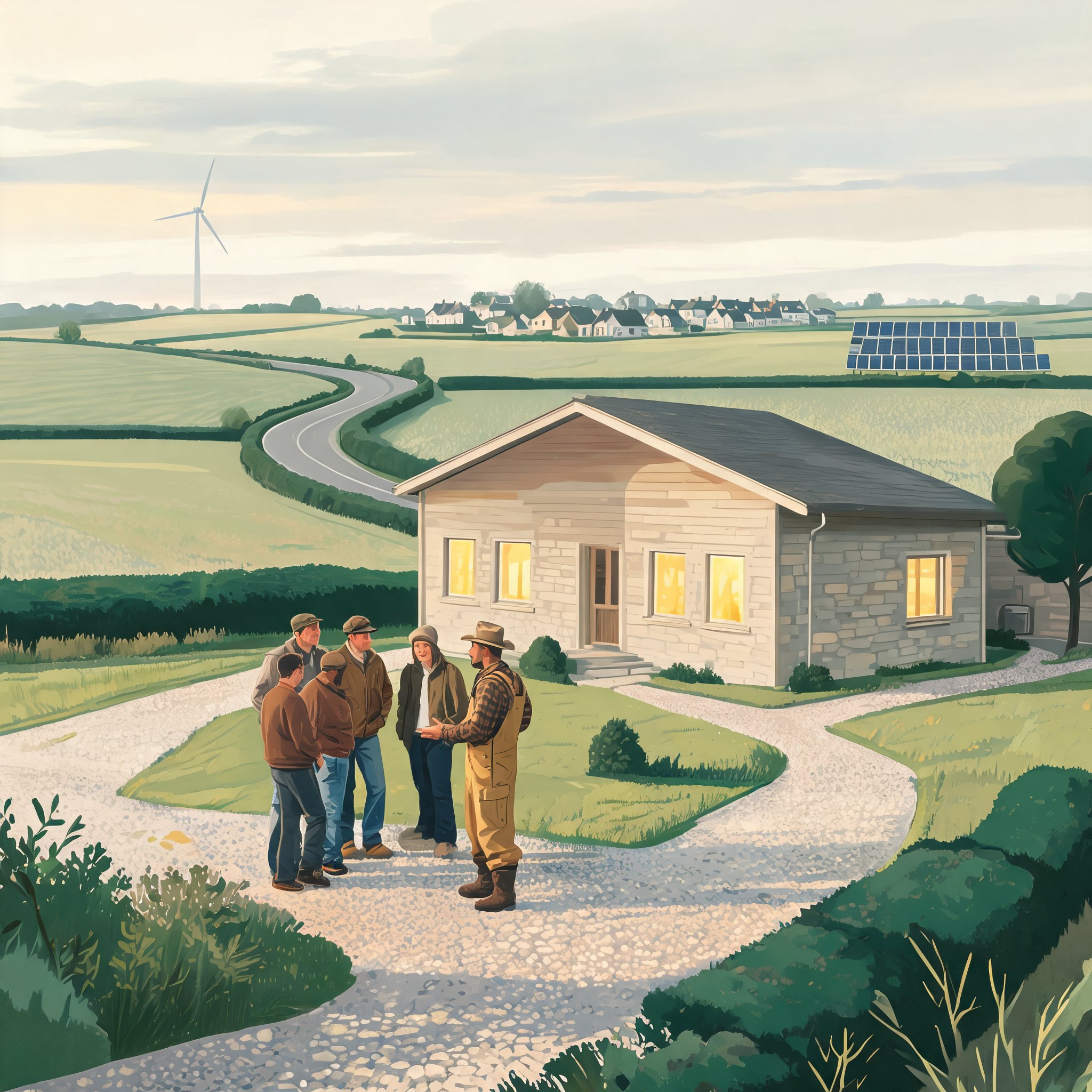
The Irish government has launched Our Rural Future 2026–2031, a rural policy that includes a pilot initiative to address isolation in farming and rural communities. The pilot is due to be launched this year and will explore locally based, innovative approaches to rural isolation, with particular attention to farmers, social connections and wellbeing.
The project is co-funded by the Department of Rural and Community Development and the Gaeltacht and the Department of Agriculture, Food and the Marine (DAFM). It is one of 240 commitments in the policy, which the government said is intended to support the continued development of rural Ireland.
Five pillars and an action plan
The policy contains 34 high-level commitments organised around five strategic pillars. It brings together commitments from government departments to ensure rural communities have the infrastructure, services and supports they need, according to the government. An accompanying action plan sets out measures for departments and agencies in the first half of the policy period, with further actions to be developed through 2031.
For DAFM, the policy includes work to develop and implement an effective Common Agricultural Policy (CAP) after 2027. The government said this includes advocating for a strong, well-funded CAP that continues to prioritise a strong LEADER programme.
Carbon farming, energy and farm supports
DAFM is also tasked with introducing a National Framework for Carbon Farming by the end of this year. The framework is meant to guide the development of a Carbon Farming Scheme aimed at strengthening farm incomes.
The policy calls for promoting the production and uptake of renewable energy on farms, including biomethane and solar energy. It says 25 key actions already identified should be implemented to support the development of an indigenous biomethane industry of scale.
Other farming-related commitments include progress on recommendations in the Commission on Generational Renewal in Farming report, implementation of the Women in Agriculture Action Plan, and more farm safety and health and wellbeing initiatives for farmers.
Rural investment and services
The policy also commits to developing and launching a new Strategic Rural Investment Fund to help develop sites and infrastructure that support enterprise and employment creation. It includes completion of the National Broadband Plan by the end of next year and expansion of Local Link bus services.
The government said the policy was informed by extensive consultation and engagement with rural communities and stakeholders. Regional events are planned for the coming months to provide information on funding opportunities and supports.
At the launch, Taoiseach Micheál Martin said rural Ireland was central to national identity and the country’s future. He said delivering the government’s rural ambitions required a coordinated approach across all departments, with rural communities placed at the centre of decisions.
Minister for Rural and Community Development and the Gaeltacht Dara Calleary said the plan built on the initial policy launched in 2021. He said it combined stronger existing supports with new measures meant to help communities respond to changing needs, strengthen local economies and services, and take advantage of advances in digital connectivity.