Justin Lombardoni, ornamental plant breeder at the Chicago Botanic Garden, used a July presentation at the Perennial Plant Association’s National Symposium in East Lansing, Mich., to explain how the Garden’s program differs from for-profit industry counterparts. To his knowledge, it is the only breeding program at a botanic garden in the country. As part of a nonprofit institution, he said, the program targets genera and traits differently from commercial breeders.
Native plants and niche genera
The program prioritizes native genera, though not exclusively. Lombardoni noted that definitions of “native” vary—some people require a species to grow in their county, others in their state or region—and said he prefers a regional standard because plants do not recognize county or state borders. When considering an exotic genus, the program examines seed fecundity, or how much seed is produced, and dispersal, or how readily seed spreads. It also considers vegetative spread through rhizomes, stolons, suckers and other non-seed means. Kudzu, he said, is an extreme reminder of what can happen when a plant’s ability to spread is underestimated.
Because the breeding program is small and has limited resources, it cannot compete head-to-head with larger commercial programs, Lombardoni said. Many mainstream genera are already saturated with dozens or hundreds of cultivars, so the Garden largely focuses on niche genera with untapped potential.
Traits the program avoids
The traits the program pursues vary by genus, but Lombardoni identified some it does not emphasize. The most prominent is highly compact cultivars, which have become common in industry breeding because they look good in pots and ship efficiently. He would not rule out releasing a promising compact selection, but he does not actively seek one. In this context, he defined compact as about 30 inches or shorter, distinguishing that from merely reducing the height of an unruly species; a 4-foot cultivar bred from a 5- or 6-foot species would not qualify as very compact in his view.
The program also avoids breeding for sterility, including “double” flowers in which additional petals may replace pistils, stamens or both, potentially reducing available pollen or making floral resources less accessible to pollinators. More broadly, Lombardoni said, the program does not seek cultivars with traits that hinder ecological function.
Pollinator studies and a model release
Pollinator support matters to many home gardeners. Lombardoni said the Garden hopes to collaborate with its Science Department, which is partnered with Northwestern University, to study pollinator visitation to breeding selections and compare it with visitation to straight species. The work could clarify differences in the abundance and diversity of pollinators visiting the two groups.
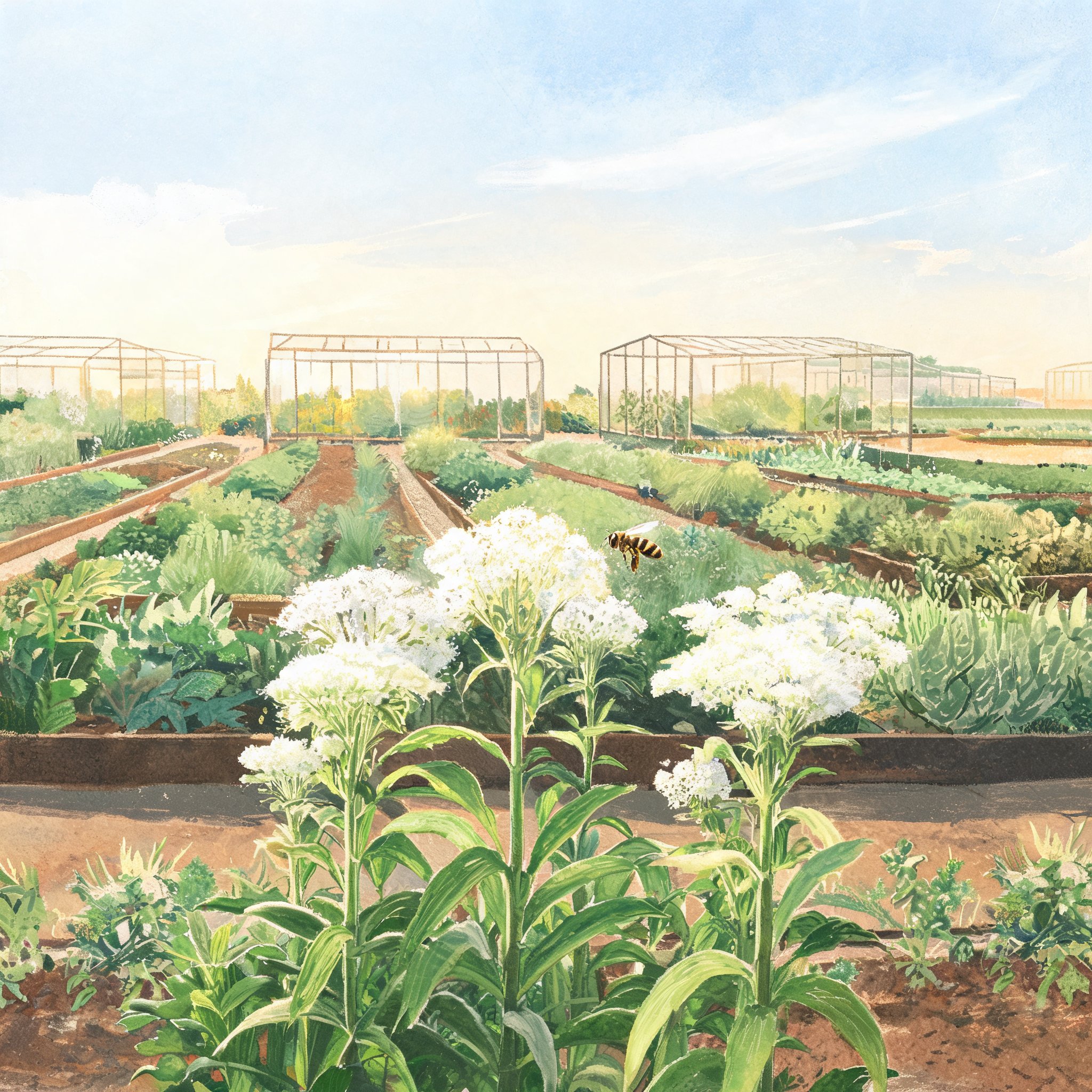
Eutrochium maculatum ‘Summer Snow’, released about 10 years ago, illustrates the program’s priorities. Its germplasm was collected roughly 90 miles from the Garden, three counties away, but Lombardoni still considers it a native selection because the species is native to the Garden’s county. The cultivar reaches about 5 feet tall, is not significantly shorter than the straight species, and has highly upright stems bearing white flowers that support pollinators from mid- to late summer.
Commercial appeal and ecological function
Aesthetics are a major consideration when breeding perennials for the commercial market, especially how a plant looks in a pot, while ecological function may not always receive the same emphasis. Because the Chicago Botanic Garden is a nonprofit, Lombardoni said, its program is not trying to release a set number of cultivars each year or maximize sales of each one. That lack of pressure allows it to breed perennials differently from many commercial programs. He hopes that means gardens will not someday consist entirely of perennials 2 feet or shorter.